
You've got two tabs open. One is a job ad for a marketing manager, £45,000, hybrid, "must be a self-starter." The other is a website offering a fractional marketing team, and you're not entirely sure what that means or why nobody will just tell you the price.
You run a service business doing somewhere between £1m and £3m. Referrals have carried you this far. You know they won't carry you to £5m. You need marketing capacity, and you need to decide how to buy it.
We've sat on the other side of that decision with founders for over ten years. Here's the maths we walk through with them, with the numbers left in.
What a fractional marketing team actually is
"Fractional" is borrowed from finance. A fractional FD gives you a finance director's judgement for a fraction of the week and a fraction of the salary. A fractional marketing team applies the same idea to the whole marketing function. Instead of one employee, you get a slice of a team: someone running paid campaigns, someone writing copy, someone building landing pages and follow-up, someone owning the tracking and reporting. They work on your business every week. They are not on your payroll.
At Codebreak we've never called it that. We call it done-for-you marketing, because that's what a founder asked for the first time we did it. Same thing. Different label.
Fractional director, fractional team, agency: not the same thing
Three offers get lumped together under this term, and they solve different problems.
A fractional marketing director is one senior person, usually a day or two a week. They set strategy and manage whoever executes. They don't run your ads or write your landing page. If you already have people who execute and nobody steering them, this is what you're missing.
A fractional marketing team does the doing. Strategy plus execution, judged on the enquiries and revenue it produces. If you have no marketing function at all and need one that works from month one, this is what you're missing.
A traditional agency sells you a service line: ads, or SEO, or a website. Often good at the one thing. Rarely accountable for whether the one thing turned into money.
Most founders searching for a fractional marketing team actually want the second one. They just haven't been sold it clearly.
The real cost of hiring a marketing manager
The job ad says £45,000. That is not what the hire costs.
Take a fictional but very typical example. Dan runs a £1.4m electrical contracting firm in the Midlands. Fourteen staff, good reviews, work comes from repeat commercial clients and word of mouth. He wants residential enquiries and he wants them predictable. He decides to hire.
Dan's numbers
- Salary (mid-market, outside London): £45,000
- Employer National Insurance (15% above the threshold): £6,000
- Employer pension (3% minimum): £1,350
- Recruitment fee (agency, 18% of salary): £8,100
- Laptop, phone, software seats, design and email tools: £3,500
- Holiday cover, sick days, onboarding time (conservative): £3,000
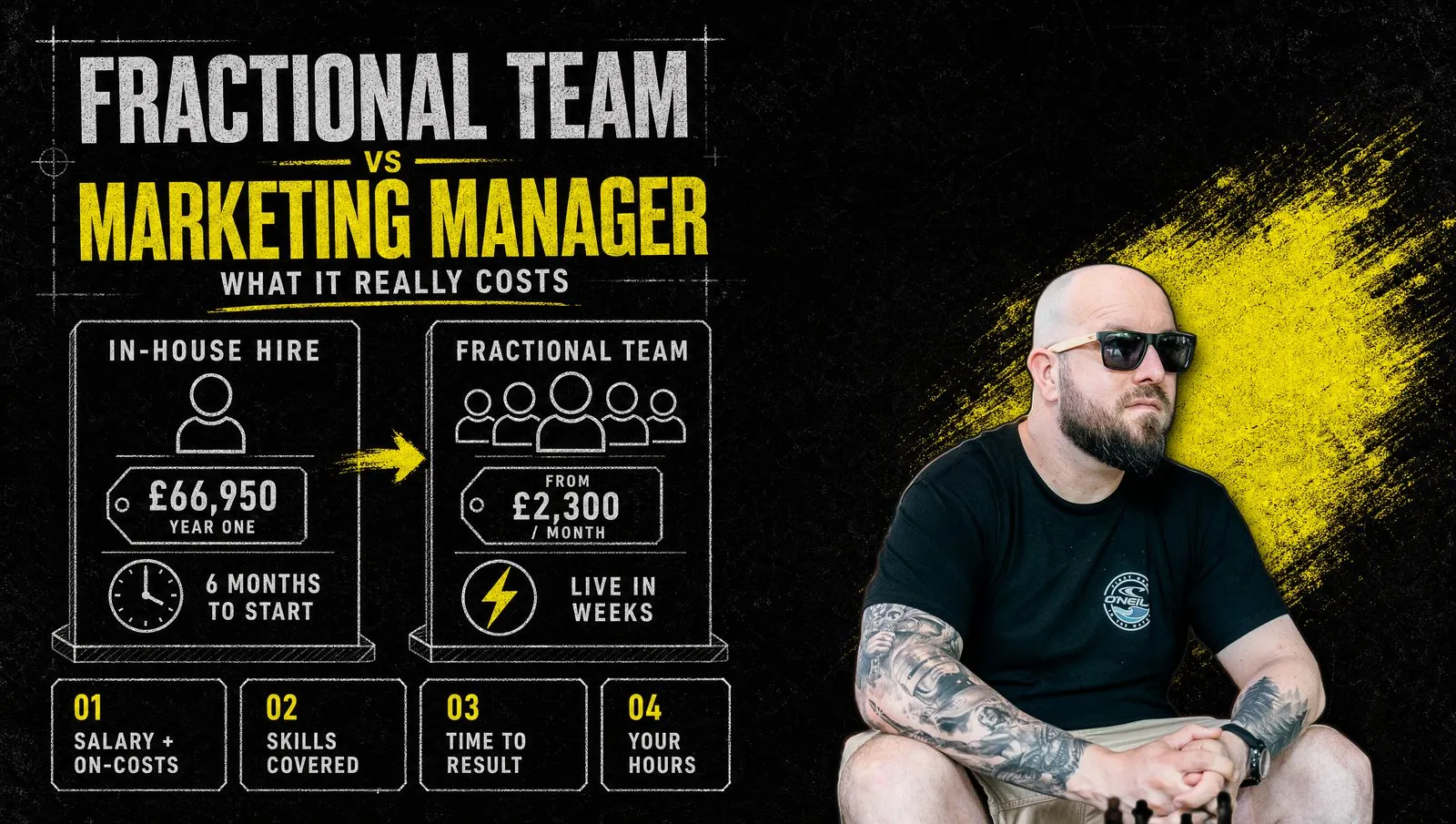
- Total before a pound of ad spend: £66,950
Then add the two costs nobody puts in the spreadsheet. Time to hire: a decent marketing manager takes eight to twelve weeks to find and another four to start. Dan is three to four months in before anyone does anything. Time to competence: the new hire needs three months to learn the business, the customer and the tools. Month seven is the first month Dan can fairly judge their output.
Half a year and nearly £70,000 to reach the starting line. And Dan has one person.
What one marketing manager can and can't do
The honest job description for the role Dan wants filled looks like this: plan and run paid campaigns on Meta and Google, write ad copy and landing pages that convert, build and test landing pages, set up and maintain a CRM with automated follow-up, wire up tracking so every lead can be traced back to what it cost, brief or shoot creative, and report weekly on cost per lead in plain English.
Nobody at £45,000 does all seven well, because these are seven different jobs. What actually happens is the manager becomes a generalist who spends half their time briefing and chasing freelancers, or gravitates to the part they're comfortable with, usually content and social, and you get a well-run Instagram account and no more enquiries than you had before. Neither is the manager's fault. The role is designed to fail.
What a fractional marketing team costs
Here's the part most providers make you book a call to find out. For a UK service business doing £1m to £3m, a fractional marketing team that runs paid acquisition, landing pages, follow-up and tracking typically costs between £2,300 and £6,250 a month. Where you land in that range depends on how much of the system you need built and how far it tracks, from leads at a known cost up to every sale traced back to the click that started it. Ad spend is always on top, and it should be, because it's your budget going to Google and Meta, not to the team.
For Dan, that puts year one somewhere between £28,000 and £75,000 for the team. Two more numbers matter more than the fee. Time to first result: a team that has built this system before doesn't need three months to learn what a landing page is, so campaigns are typically live within weeks, not quarters. Your time: on our own packages the founder's time runs from roughly three hours a month at the entry level to eight at the top, compared with line-managing an employee whose output you can't personally judge.
Side by side
- Year one cost before ad spend: in-house manager £65,000–£85,000, fractional team £28,000–£75,000
- Time to first campaign live: in-house manager 4–7 months, fractional team weeks
- Skills covered: in-house manager one generalist, fractional team paid, copy, pages, follow-up, tracking
- Reporting: in-house manager whatever they know how to build, fractional team cost per lead and cost per enquiry, weekly
- Your time: in-house manager line management plus decisions they can't make, fractional team 3–8 hours a month
- Who owns the ad accounts and data: both, you, always check this
The table isn't the whole argument. There are situations where the in-house hire wins.
When hiring in-house is the right call
We turn work away when this is true, so we'll say it plainly. You're past £20m and running several channels across several markets: at that scale the coordination job alone is a full-time role, and the budget justifies a proper department rather than one hire. Marketing has to sit inside the building for a reason: heavy internal comms, a brand that lives in every customer interaction, a franchise or regulated environment where sign-off has to be instant. You want to build a department, not buy an outcome: fair, just budget for the whole department, not one hire.
There's also a hybrid that works well and almost nobody talks about. A fractional team runs acquisition. A junior in-house coordinator on £26,000 to £30,000 handles the day-to-day: photos from jobs, reviews, replying to comments, keeping the sales team fed. The specialist work is done by specialists. The founder still has someone down the corridor. Total cost lands well below one senior hire.
Six questions to ask before you sign with anyone
Whether you're interviewing a candidate or a provider, the same six questions sort the serious from the rest.
- What number will you report to me weekly, and does it have a pound sign on it? If the answer is reach, engagement or impressions, keep walking.
- Who is actually doing the work on my account? Names, not "our team."
- What does it cost me if I want to stop? Twelve-month minimums exist for good reasons. Three-year lock-ins don't.
- Who owns the ad accounts, the CRM data and the landing pages if we part ways? The answer must be you.
- What happens if the agreed numbers aren't hit? A shrug, a discount, or a commitment to keep working until they are.
- Show me the last business like mine you did this for, and what it cost them per enquiry. Not a logo wall. A number.
A marketing manager candidate won't be able to answer all six, and that's fine, they're an employee. A fractional team that can't answer all six isn't one.
Where Codebreak fits
We build and run marketing systems for owner-led UK service businesses doing £750k to £5m. Over ten years that has meant more than £45m of ad spend managed and over £400m of trackable client sales. Trackable is the word that matters. If we can't show you the line from the ad to the enquiry to the invoice, we don't count it.
Our three levels of partnership map directly onto the decision in this article. Pipeline is the always-on lead system. Scale turns those leads into qualified enquiries with multi-step follow-up, and it's where most businesses doing £1m to £3m start. Signature is the full external marketing department, with SEO and authority content on top of paid.
Every level comes with the same guarantee. We agree the KPIs at the start. Miss them and we keep working at no extra cost until we hit them, as long as you hold up your end.
If you're Dan, and you've got the two tabs open, book a free strategy call. We'll look at your numbers and tell you straight whether a fractional team, a hire, or the hybrid makes sense for where you are. If it's the hire, we'll say so.
Frequently asked questions
What is the difference between a fractional marketing director and a fractional marketing team?
A fractional marketing director is one senior person who sets strategy and manages whoever executes, usually a day or two a week. A fractional marketing team includes the people who do the execution: paid campaigns, copy, landing pages, follow-up and tracking. If you have nobody doing the work, you need the team. If you have people doing the work and nobody steering, you need the director.
How much does a fractional marketing director cost in the UK?
Most UK fractional marketing directors charge between £700 and £1,200 a day, so one to two days a week runs from roughly £3,000 to £9,000 a month. That buys strategy and oversight, not execution. You'll still need to pay for the people or agency who run the campaigns, which is why founders at £1m to £3m usually get more from a fractional team that includes the doing.
Is a fractional marketing team just an agency with a different name?
Sometimes, which is why it's worth asking direct questions before signing. The genuine difference is scope and accountability. An agency typically sells one service line and reports on activity within it. A fractional marketing team runs the whole acquisition system, from ad to enquiry, and is judged on the enquiries and revenue it produces. If a provider can't tell you your cost per enquiry, they're an agency whatever they call themselves.
Do I still pay for ads on top of a fractional marketing team's fee?
Yes, and you should want it that way. Ad spend goes directly to Google or Meta from your account, so you can see exactly what was spent and what it produced. A provider who bundles ad spend into a single fee is making it impossible for you to see their margin. For a service business doing £1m to £3m, a working monthly ad budget usually starts around £2,000 to £3,000 and scales with results.
Should a £1m service business hire in-house marketing or outsource it?
Below roughly £20m, outsourcing to a team that covers the full skill set almost always beats one in-house hire on cost, speed and coverage. Above £20m, or where marketing has to live inside the business for brand or regulatory reasons, a senior in-house lead with specialist support bought in around them is often the better structure. The hybrid, a fractional team plus a junior in-house coordinator, works well for most businesses in between.